
Steel Structure Acoustic Insulation: How We Made a Factory Office 30 dB Quieter
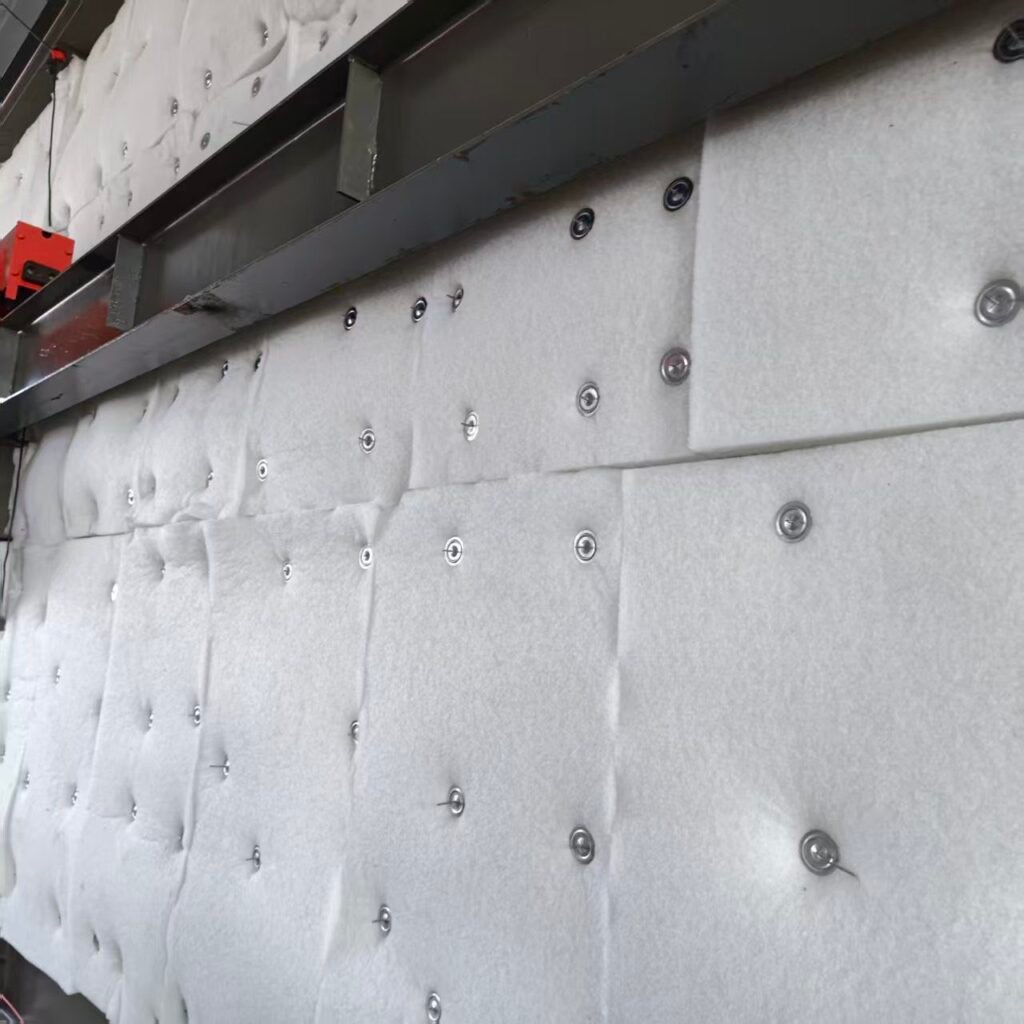
The short answer: to fix acoustic insulation to a steel structure, clean the steel, stick self-adhesive insulation pins onto it, push the insulation over the pins, lock each pin with a self-locking washer and bend the surplus pin flat. On this 50 m² office wall we used 400 pins and added a steel cover sheet, and the office became about 30 dB quieter.
In September 2026 we carried out steel structure acoustic insulation on an office that sits inside a working factory in Hebei, China. The people in that office had one complaint: the noise from the production floor came straight through the steel wall. This article walks through the job exactly as it was done — the acoustic insulation, the pins and washers that held it to the steel structure, the cover sheet over the top — and the one decision that made it slower than it needed to be.
In this article
- Why did a steel office need acoustic insulation?
- What materials does steel structure acoustic insulation need?
- How do you fix acoustic insulation to a steel structure?
- Why cover the insulation with a steel sheet?
- Acoustic wool or acoustic board: which is faster to install?
- How many pins and washers will your wall need?
- Choosing pins and washers for steel structure acoustic insulation
- How was the 30 dB measured?
- References
Why did a steel office need acoustic insulation?
The office is a steel structure: steel columns and beams with a profiled steel wall. That kind of building goes up quickly and costs little, but a single skin of thin steel does almost nothing to stop sound. With machines running on the other side, the noise came straight into the office.
The brief was simple: make the office quieter without taking the building apart.
| Location | Hebei Province, China |
|---|---|
| Dates | 15–16 September 2026 |
| Wall area treated | About 50 m² |
| Crew | 3 people |
| Time on site | 1.5 days |
| Pins used | 400 |
| Result | Average noise in the office down from 80 dB to 51 dB |
What materials does steel structure acoustic insulation need?
Five, and each one has a single job:
| Material | Specification | What it does |
|---|---|---|
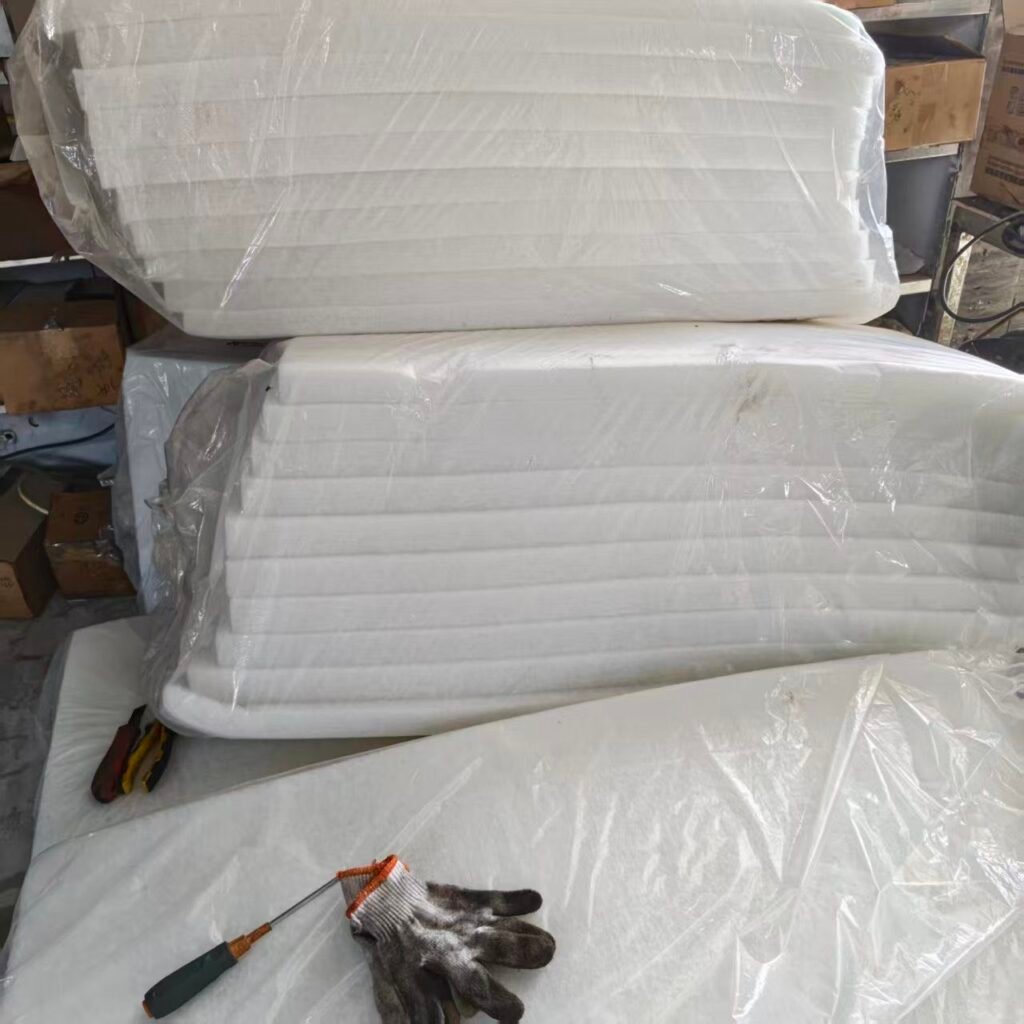
| Acoustic wool | Polyester fibre, 1200 × 600 × 50 mm, 80 kg/m³, sound absorption coefficient 0.9 | Absorbs sound energy in the wall |
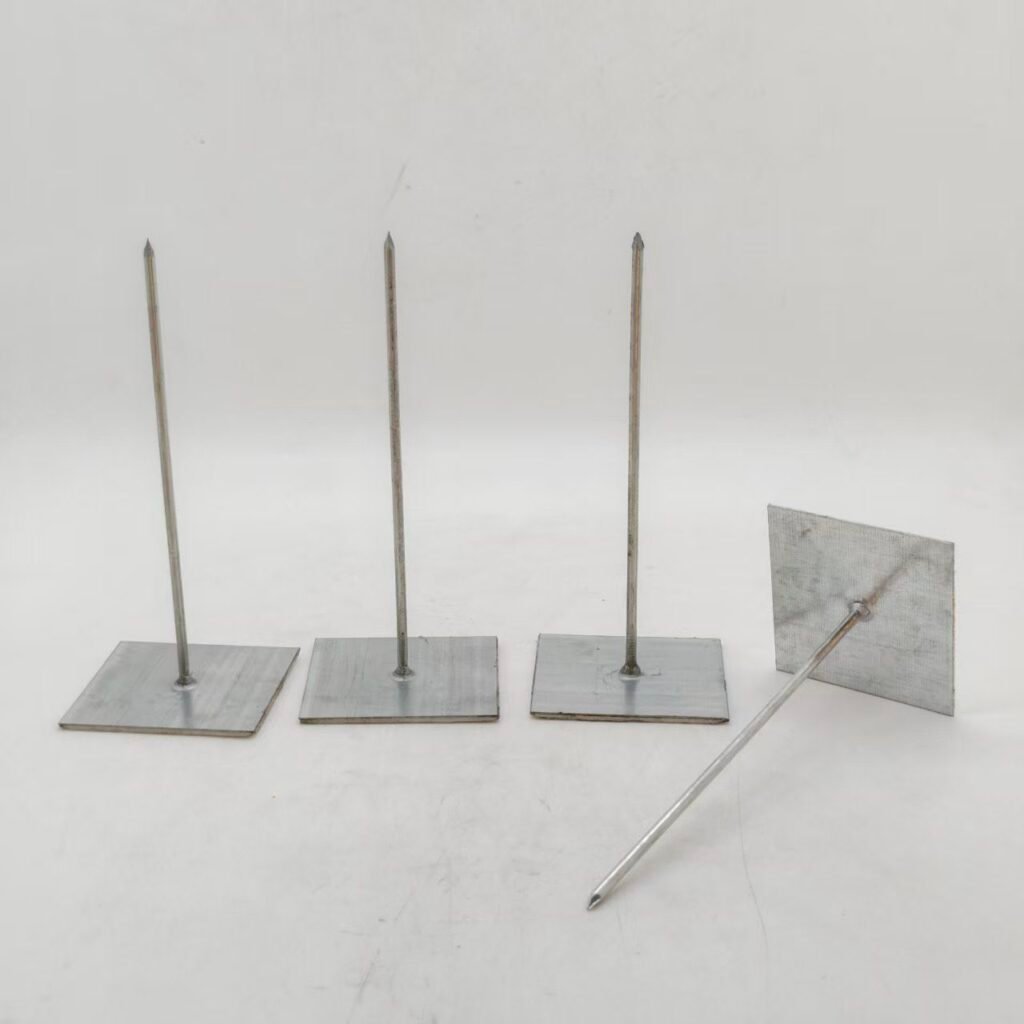
| Self-adhesive insulation pins | 50 × 50 mm square base, 100 mm long, 3 mm pin | Hold the wool to the steel without drilling or welding |
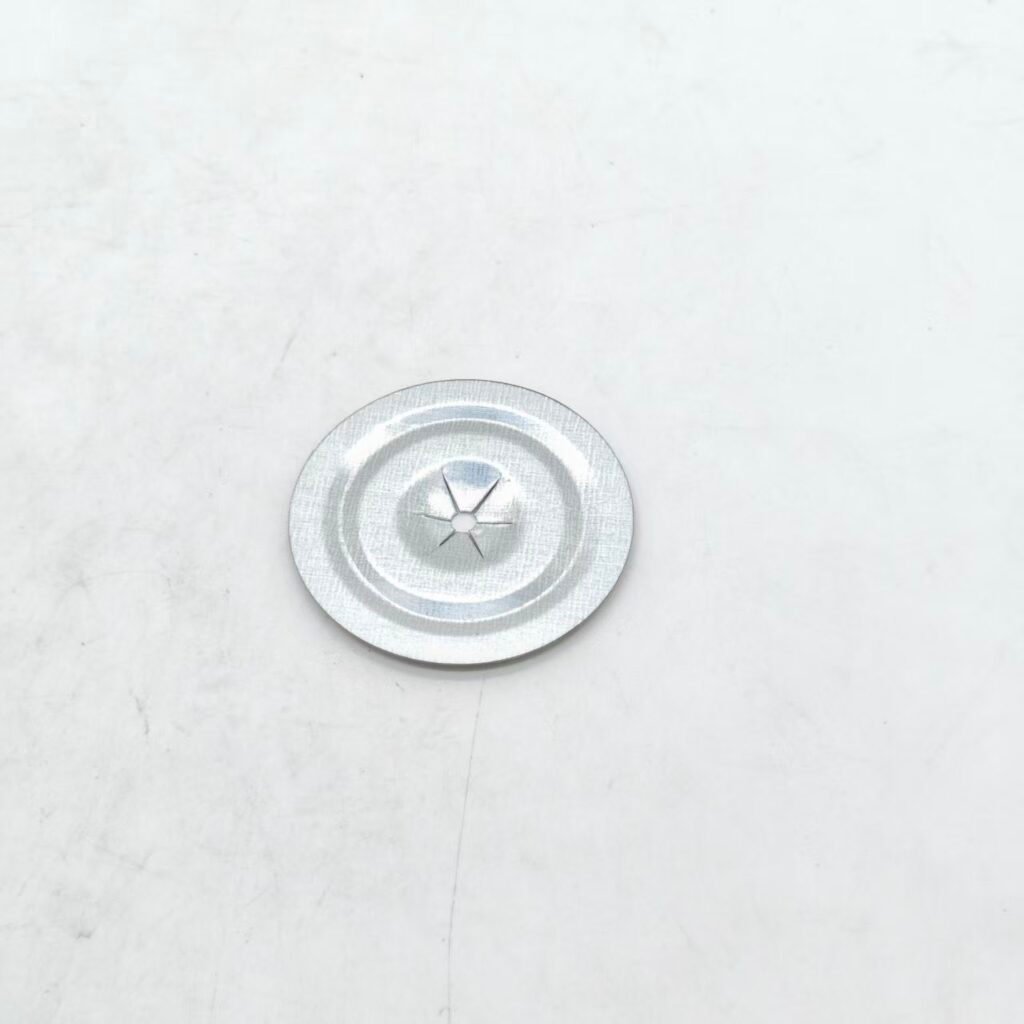
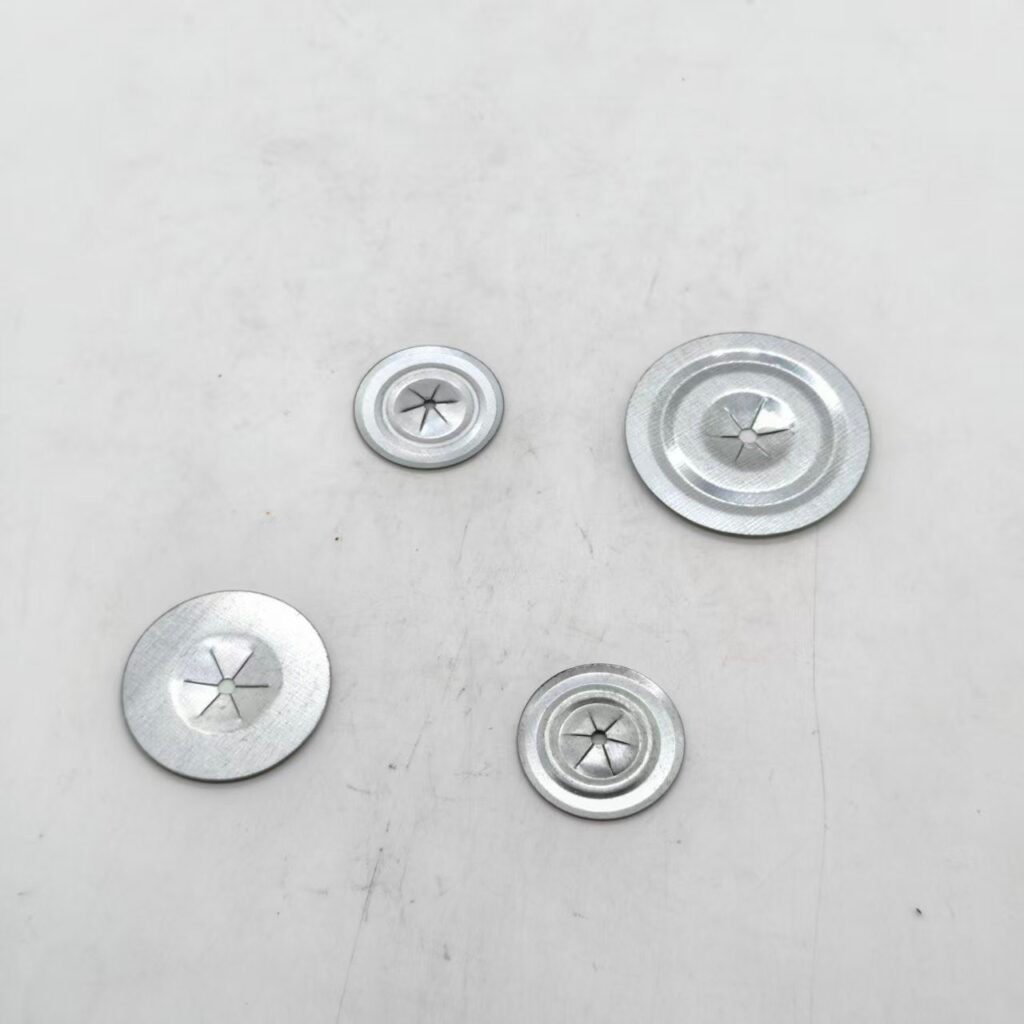
| Self-locking washers | 50 mm round, galvanised, hole about 2.6 mm for a 3 mm pin | Lock the wool onto the pins |
| Steel roofing sheet | Profiled steel sheet, reused | Covers and protects the insulation, adds mass |
| Self-drilling screws | — | Fix the roofing sheet through the wool into the steel wall |
Why self-adhesive pins on a steel wall
A self-adhesive pin (also called a self-stick pin) is a steel pin fixed to a flat base that is glued to the surface. Nothing has to be drilled and nothing has to be welded, which matters on an occupied building: no sparks next to the insulation, no holes through the existing wall, and no welding equipment to bring in for a two-day job. The 50 × 50 mm base gives the adhesive a large contact area on the flat steel.
Why 50 mm self-locking washers
A self-locking washer has a star-shaped hole slightly smaller than the pin. Here the hole is about 2.6 mm on a 3 mm pin, so the tabs flex as the washer is pushed on and bite when anything tries to pull it back. That grip is what keeps the wool held tight against the wall. The 50 mm diameter spreads the load over the soft wool so the washer does not simply sink into it.
How do you fix acoustic insulation to a steel structure?
Six steps, in this order:
- Clean the steel. Wipe the wall until there is no oil and no dust on it. A self-adhesive pin is only as strong as the surface under its glue, and a factory wall collects both.
- Stick the pins. Press each pin base firmly onto the clean steel. We used 400 pins over about 50 m², which works out at roughly 8 pins per square metre, or 5–6 pins for each 1200 × 600 piece of wool.
- Push the wool over the pins. Line each piece up and press it on so the pins come through the front face. Butt the pieces tightly together; gaps are where sound gets through.
- Lock it with a washer. Push a self-locking washer down each pin until it holds the wool firmly against the wall.
- Bend the surplus pin. The 100 mm pins leave a length standing proud of the washer. Bend it over flat so nothing is left sticking out.
- Fit the cover sheet. Fix the steel roofing sheet over the insulation with self-drilling screws that pass through the wool into the existing steel wall.
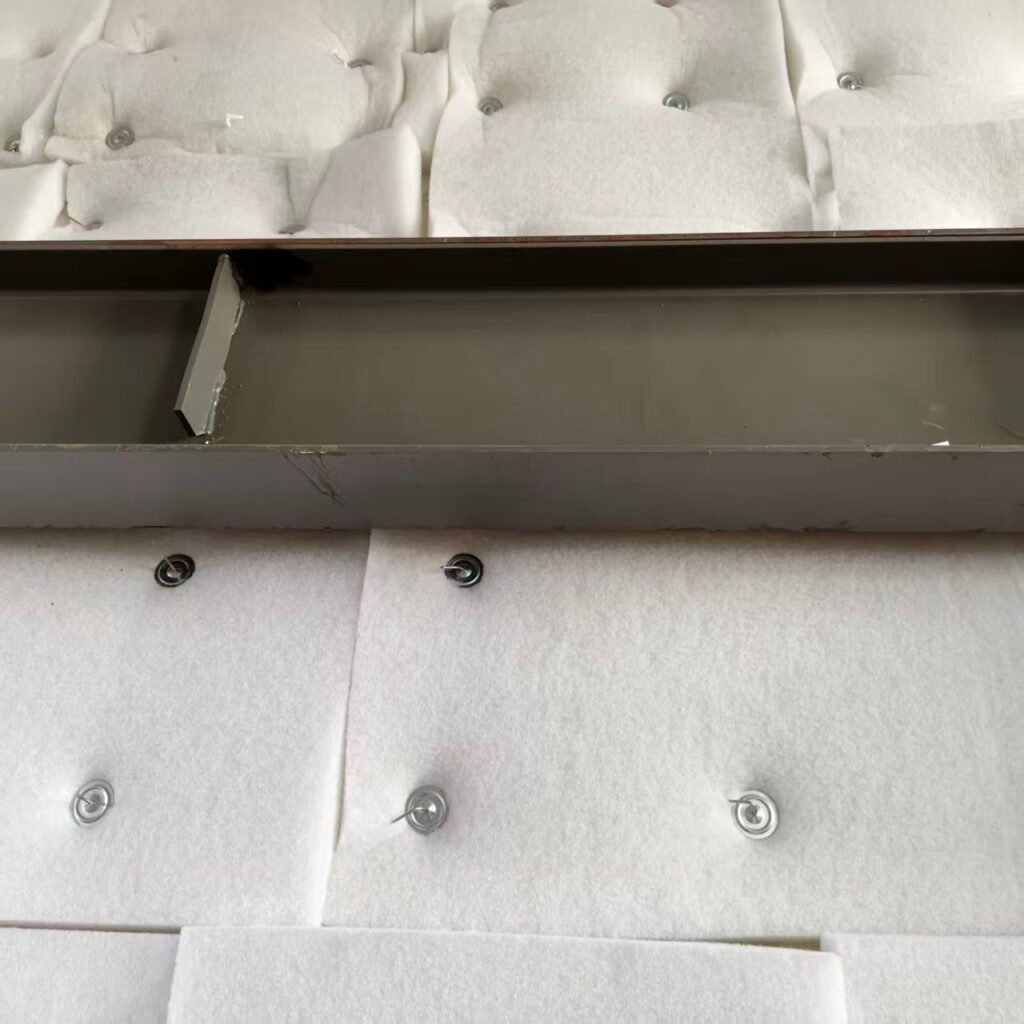
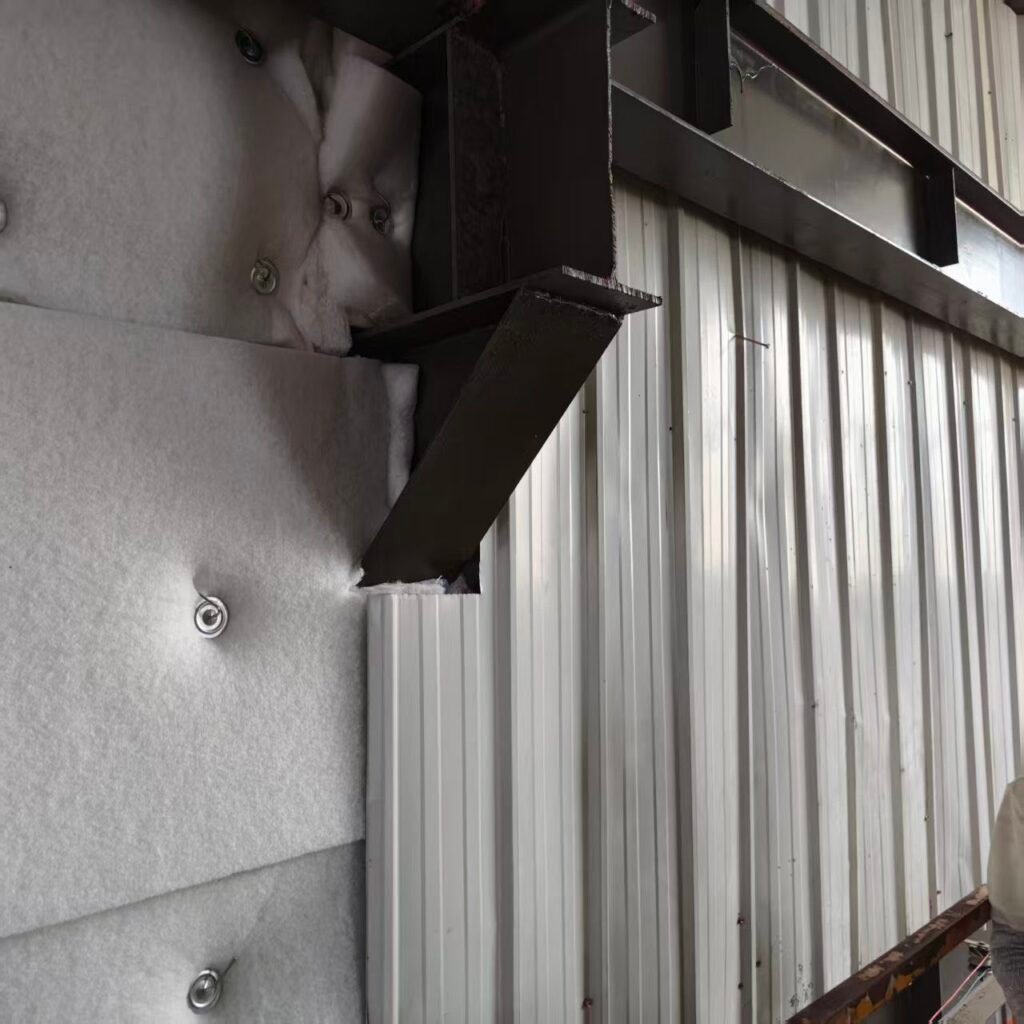
Where the wall meets a steel beam or bracket, the wool has to be cut around it. Take the time to fit it closely: every gap left at a junction is a direct path for noise.
Why cover the insulation with a steel sheet?
For protection, for sound blocking and for a clean surface. The wool on its own would have looked finished once the washers were on; we still covered it, for these three reasons.
1. It protects the insulation
Acoustic wool is soft. Left exposed, it gets knocked, torn and dirty, and loose fibres end up in the room. Nobody leaves an insulation layer bare in a finished building, and an office is no exception.
2. It blocks sound as well as the wool absorbs it
This is the part most people miss. Absorbing sound and blocking sound are different jobs. Acoustic wool absorbs: it turns sound energy into a tiny amount of heat inside its fibres. What stops noise passing through a wall is mass. With the steel cover sheet in place, the wall becomes a sandwich — steel, wool, steel — and that combination does far more against factory noise than wool on a single steel skin.
3. It gives the room a clean, hard-wearing surface
A steel sheet can be wiped down, does not shed and does not mind being bumped by a chair.
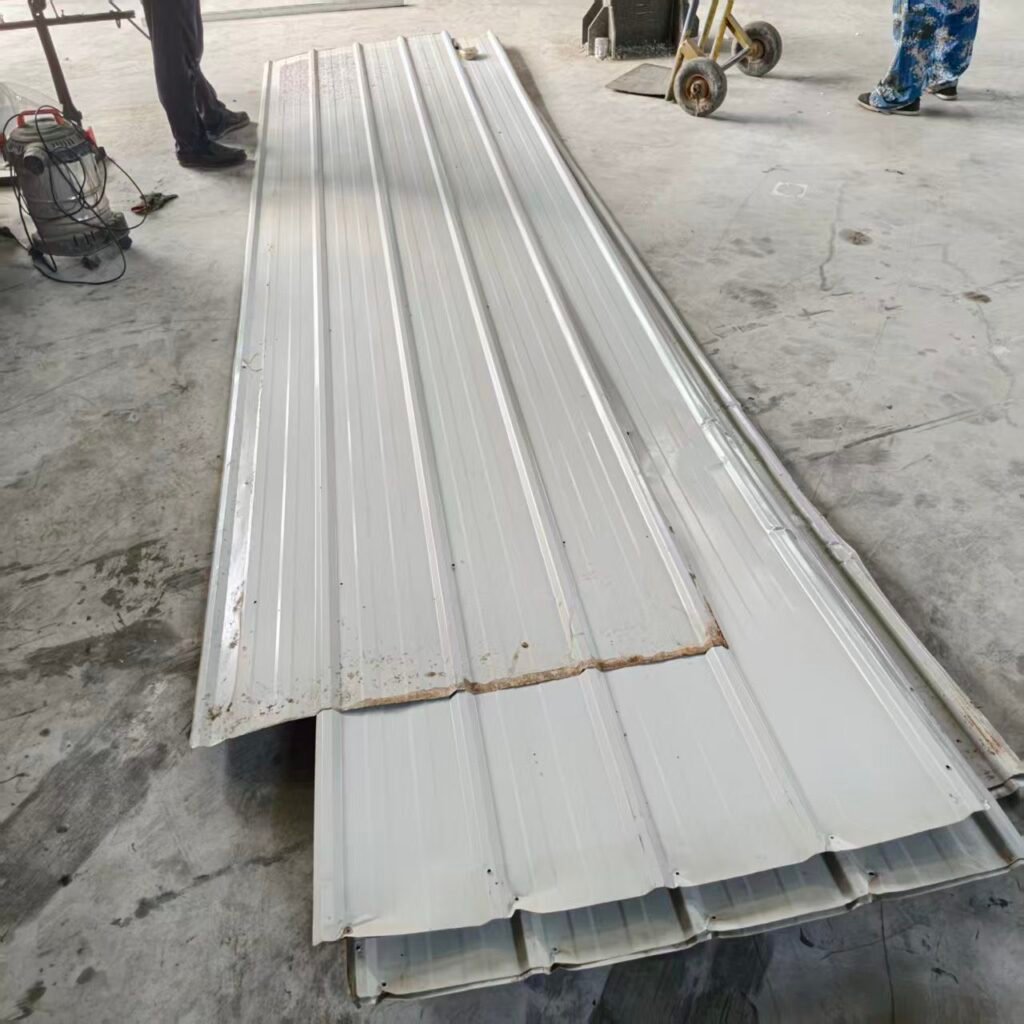
We had old profiled steel roofing sheets in stock, so we reused them. For a cover layer whose job is mass and protection, a reused sheet does the job as well as a new one.
Acoustic wool or acoustic board: which is faster to install?
Board, by a clear margin. The job took 1.5 days for three people. It should have been faster, and the reason was the material.
The client chose acoustic wool rather than acoustic board because wool is cheaper per square metre. On paper that was the right call. On the wall it cost us time, in one place in particular: fixing the cover sheet. Wool behaves like cotton. When a self-drilling screw goes through it, the fibres wrap around the drill point and bind, and the screw struggles to bite into the steel wall behind. It slowed down every single fixing.
A rigid acoustic board does not wrap around the screw. The screw passes straight through, and the sheet goes up at the speed it should. On this job, what was saved on material was paid back in installation time.
Our advice: for large areas, choose acoustic board over acoustic wool. The board costs more to buy, but installation is much faster, and above a certain area the labour saved is worth more than the material saved. For a small area, wool is still a sensible choice.
How many pins and washers will your wall need?
About 8 pins and 8 washers per square metre on a wall. The numbers from this job make a useful starting point for estimating a similar one. Everything below comes from the 50 m² wall above.
| Item | How to estimate | This project |
|---|---|---|
| Acoustic wool | Wall area ÷ 0.72 m² per 1200 × 600 piece, plus cutting waste | 50 m² ÷ 0.72 ≈ 70 pieces |
| Self-adhesive pins | About 8 per m² on a wall | 400 pins |
| Self-locking washers | One per pin | 400 washers |
| Labour | Area ÷ output per person per day | 3 people × 1.5 days = 4.5 person-days, about 11 m² per person-day |
Two cautions. First, the labour figure is for wool with a cover sheet; with rigid board, as explained above, expect it to be noticeably better. Second, allow extra pieces for the cutting around beams, brackets and openings — on a wall with many junctions, waste adds up quickly.
If you send us the wall area, the insulation thickness and a photo of the surface, we can work out the pin length, washer size and quantities for you.
Choosing pins and washers for steel structure acoustic insulation
The same method works on most clean, flat steel surfaces, such as steel walls and ducts. A few rules we work to:
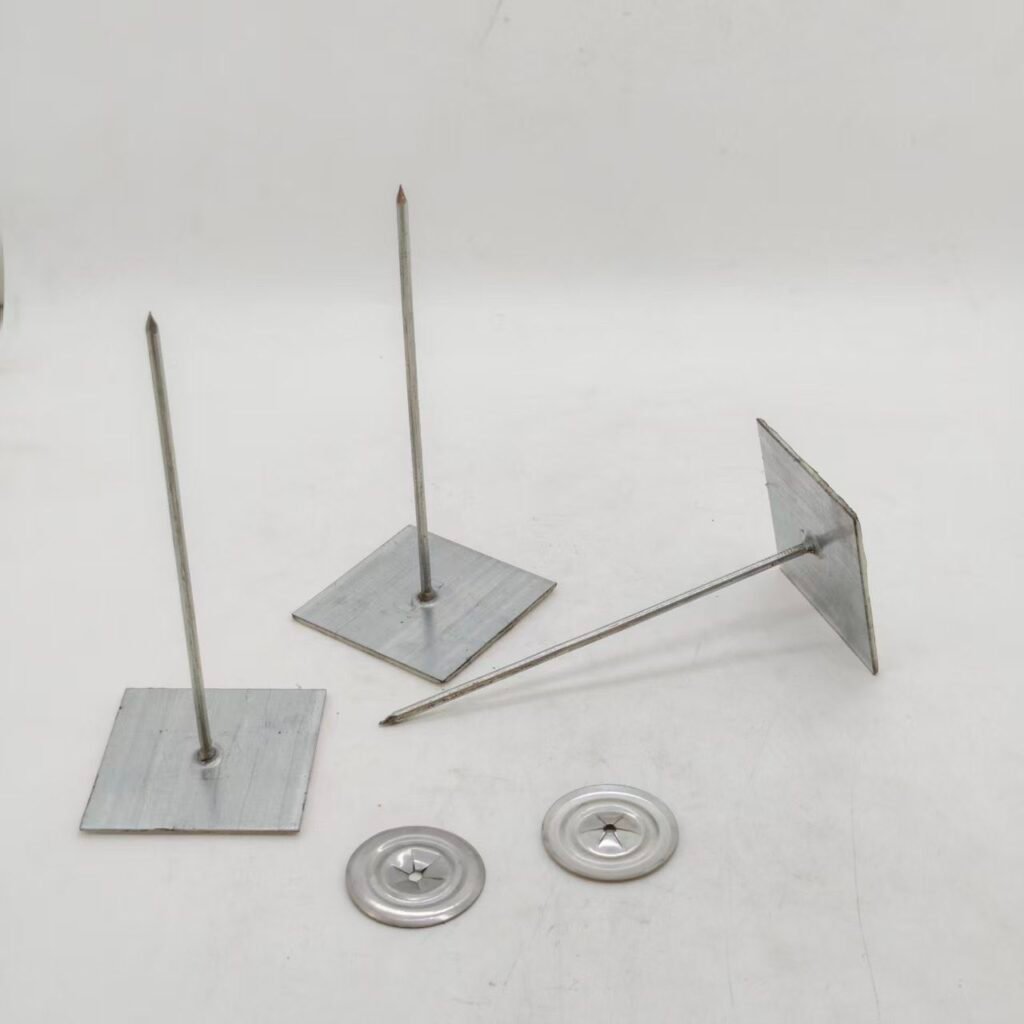
- Pin length follows the insulation. The pin has to pass through the insulation with enough left over for the washer to lock onto. Surplus length is easy to bend or cut off; a pin that is too short cannot be fixed.
- Match the washer to the pin. A self-locking washer is made for a specific pin diameter. A washer for a 3 mm pin on a thinner pin will not grip.
- Go large on soft materials. Wool and other soft insulation need a larger washer, such as 50 mm, so it holds without cutting in.
- The surface decides the adhesive’s strength. Clean, dry, flat steel gives a self-adhesive pin its best hold. If a surface is rusty, painted with something flaky or very uneven, talk to us before you order.
How was the 30 dB measured?
With a sound-meter app on a phone, inside the office, before and after the work:
| Before | After | |
|---|---|---|
| Average | 80 dB | 51 dB |
| Maximum | 88 dB | 73 dB |
The average fell by 29 dB, which is where the “about 30 dB” comes from. To put that in context: 80 dB is loud enough that you have to raise your voice, while around 50 dB is the level of a normal quiet office.
This is a phone reading on site, not a laboratory test, and it is the result of the whole wall build-up — wool and cover sheet together — not of the wool alone. The sound absorption coefficient of 0.9 is the material supplier’s figure for 50 mm. If you are comparing acoustic materials, ask which measurement a figure refers to: absorption is usually rated under ISO 11654, and two numbers measured differently are not comparable.
References
- ISO 11654:1997, Acoustics — Sound absorbers for use in buildings — Rating of sound absorption. International Organization for Standardization. iso.org/standard/19583
- Sound absorption coefficient of the 50 mm polyester acoustic wool (0.9): material supplier’s data, provided to IFS for this project.
- Before/after noise readings (average 80 dB → 51 dB): measured on site by the IFS team, September 2026.
FAQ
Frequently asked questions
Can self-adhesive insulation pins be used on a steel wall?
Yes. On clean, dry, flat steel, self-adhesive pins hold insulation without any drilling or welding. On this project 400 pins held 50 m² of acoustic wool on an existing steel wall.
How many insulation pins do I need per square metre?
On this job we used about 8 pins per square metre — 400 pins for 50 m², or 5–6 pins per 1200 × 600 mm piece. The right number depends on the material's weight and whether it is fixed to a wall or overhead.
What size self-locking washer should I use for acoustic wool?
For soft insulation such as wool, use a larger washer — we used 50 mm round washers — and make sure it is made for your pin diameter, here 3 mm, so the locking tabs grip.
Is acoustic wool or acoustic board better for a large wall?
For large areas, acoustic board is usually the better choice. Wool is cheaper to buy, but its fibres wrap around self-drilling screws and slow down fixing the cover sheet; board goes up much faster.
Why cover acoustic insulation with a steel sheet?
Three reasons: it protects the insulation from damage and stops fibres getting into the room, it adds mass that blocks sound passing through the wall, and it gives a clean, durable surface.